
Interventions for Building Regulation
Understanding why children become dysregulated is only half the task. The other half is knowing what to do in the moment and over time to help restore balance. Interventions for building regulation are not quick fixes or behavior-control strategies. There are ways of supporting the child’s nervous system, building trust, and gradually strengthening the capacity for self-regulation.
Effective interventions rest on several principles: begin with assessment of the child and the context, focus on co-regulation, use calming strategies tailored to the child’s profile, and foster resilience through repair and play. Ultimately, the goal is not simply to reduce problem behaviors but to reconnect the child with a felt sense of safety, the buffer to dysregulation.
Beginning with Assessment

Before jumping into action, adults must pause and assess the situation. The first questions are not about what the child did, but about what state the child is in.
- Is the child alert to my presence?
If the child is dissociated or shut down, they may not even register attempts at comfort. Gentle steps are needed to re-establish awareness before anything else can happen.
- Do I have the child’s attention?
A child lost in sensory overload or panic, cannot process instructions or verbal reasoning. Adults must first help restore basic calm so that the child is available to attend.
- Is the child aware of their surroundings?
If the environment is overwhelming—too loud, too bright, too chaotic—reducing stimulation may be more effective than speaking.
- Is the child conscious of what just happened?
Some children dissociate during perceived traumatic experiences. They may have little memory of their actions or their impact. Immediate reflection or discipline is unlikely to help; safety and capacity for connection must be restored first.
Assessment guides intervention. Without it, adults risk escalating distress by demanding attention, reflection, or compliance when the nervous system is not ready.
Six Core Areas of Regulation
Researchers have identified six basic areas where regulation must be supported:
1. Deep Sleep Cycling
Sleep is the foundation of regulation. Children who are sleep-deprived struggle to cope with even minor stressors. Supporting healthy sleep routines is often the first step toward reducing behavioral challenges.
2. Alert Processing
A child must be able to shift smoothly between states of alertness—waking, focusing, relaxing—without being stuck in over- or under-reactivity, which causes hyperarousal or lethargy.
3. Connection to Visceral Cues
Children need to recognize and respond to bodily signals like hunger, thirst, the need to sneeze or cough, the need to use the toilet, or fatigue. Misinterpreting or a lack of awareness of these cues often contributes to dysregulation.
4. Clarity of States and Transitions
Regulation requires the ability to move from one state to another—rest to play, play to calm—without abrupt swings. Many neurodiverse children struggle with these transitions, leading to sudden outbursts.
5. Adaptive Stress Responses
Healthy regulation allows children to tolerate manageable stress, respond flexibly, and create adaptive responses or recover without collapse.
6. Efficient Stress Recovery
After distress, children should be able to return to baseline. For many, stress lingers long after the event, keeping them vulnerable to new triggers.
Each of these areas may require targeted support, and progress is gradual.
Co-Regulation: The Bridge to Self-Regulation

Self-regulation does not develop in isolation. It begins with co-regulation, where a caregiver provides external stability until the child can internalize those patterns.
- Infancy: A baby cries, and the caregiver rocks and soothes. Over time, the infant learns what calm feels like.
- Early Childhood: A toddler melts down, and a parent sits nearby, offering calm presence rather than punishment. Slowly, the child learns to recover with help.
- Later Childhood: An anxious student is supported by a teacher’s reassuring glance or gentle words, grounding them in the moment.
Co-regulation is not indulgence; it is teaching by example. When caregivers model calm, use steady voices, and maintain safe presence, children borrow that stability. Over time, they internalize stability and build their own capacity to self-regulate.
Creating Safety in Distress
When everyone is distressed—child, caregiver, even the professional—the practitioner’s role is to reframe the moment. Instead of viewing the child as “acting out,” the adult interprets behavior through a neuro-relational lens: the child is fearful, and therefore dysregulated, not defiant.
The practitioner becomes a co-regulator between caregiver and child, helping each attune to the other. This may involve increasing caregiver awareness of the child’s internal state, slowing interactions, finding environmental accommodations, or guiding caregivers to support each other before returning to the child. Simple shifts in affect, gesture, or body language—softening the face, lowering the voice, using open posture—can send powerful cues of safety.
Calming and Soothing Strategies

No single technique works for every child.
Effective soothing requires matching interventions to the child’s sensory profile.
- Rhythmic and Repetitive Input
Rocking, swaying, or singing in a rhythmic pattern can help regulate the nervous system. A sing-song voice or gentle humming provides predictable input.
- Reducing Stimulation
Lowering lights, reducing background noise, or minimizing visual clutter can prevent further overload. Sometimes the best intervention is subtraction, not addition.
- Respecting Boundaries of Touch
Some children crave deep pressure—such as a heavy blanket or firm hug—while others recoil from touch altogether. Attunement means noticing the child’s cues and responding accordingly.
- Auditory Comfort
Music, lullabies, or familiar voices can soothe, but the wrong sound may agitate. Caregivers must learn what feels calming to the individual child within the environmental context.
- Proprioceptive and Vestibular Input
For some children, pushing against a pillow, swinging, or bouncing gently provides grounding. For others, these sensations are overwhelming. Observing and adapting is key.
- Affect Alignment
Caregivers must mirror the child’s intensity without overwhelming them. Too much enthusiasm may feel invasive; too little responsiveness may feel rejecting, or go unnoticed. The goal is to say to the child, through body language, tone and timing: “I know what it feels like to be you right now.”
These strategies work not only in crisis but also preventatively, helping children build resilience against future dysregulation.
Repair and Recovery

Ruptures are bound to happen many times daily in the messiness of normal life. Knowing how to repair is the key to creating relational safety.
Once calm is restored, the process of Repair begins. But timing matters.
- “Strike when the iron is cold” is a guiding principle. Attempts to discuss the incident or behavior too soon may backfire, as the child may not remember or may feel ashamed.
- Many children are unaware of what happens if they dissociate. Others are unaware of the impact of their actions on others. Reflection requires readiness.
- Repair may begin with a nonverbal connection—how does this child feel safe in the presence of the other? For some children, eye contact, touch, and open gestures communicate safety. For others, the adult needs to look away, make themselves small, rely on gesture or shared activity, before moving into verbal reflection.
The goal is not punishment but restoration of an internal sense of safety and security. Adults who can communicate safety, even after dysregulation, are often able to maintain connection. This reassurance is essential for long-term healing.
The Role of Play
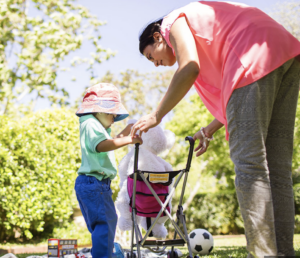
Play is not a luxury; it is a neural exercise for regulation. Through play, children practice shifting states, coordinating with others, tolerating disappointment, and engaging in symbolic processes that calm and restore.
- Rough-and-tumble play helps regulate energy and stress responses.
- Pretend play allows children to rehearse coping with fear in safe contexts.
- Interactive play with caregivers strengthens co-regulation, as laughter and shared joy activate the social engagement system and reinforce the internal sense of safety.
When child and caregiver engage playfully, affective signals of connection are exchanged, activating the neural systems that support safety and resilience.
Therapy Through the Lens of Polyvagal Theory
Polyvagal-informed therapy emphasizes that interventions must begin with the child’s physiological state.
- Witnessing the State: Practitioners must observe and respect the child’s initial biobehavioral state rather than demanding immediate compliance.
- Passive Pathway: Using social engagement cues—soft voice, gentle eye contact, rhythmic repetitions, slowing the pace—to signal safety.
- Active Pathway: Engaging in synchronous, reciprocal interaction (like rhythm games) to exercise regulation skills.
- Expanding Tolerance: Gradually increasing the child’s ability to remain regulated across a wider range of experiences.
This approach builds resilience not through control, but through trust, connection, and the steady expansion of safety.
Conclusion: Reconnecting Safety

The goal of intervention is not to eliminate meltdowns entirely but to reconnect the child with a sense of safety. When children feel safe—physiologically, emotionally, and relationally—they can access learning, social engagement, and growth. Each calming strategy, each co-regulated moment, each successful repair contributes to building a foundation of resilience.
In this light, interventions for building regulation are not quick fixes but investments in the child’s long-term ability to thrive.